 CatchScan
The four rules that decide whether you can keep a fish
- Minimum size limit. The fish must be at least this long to keep. It protects fish until they've had a chance to spawn at least once.
- Slot limit. Some waters reverse the logic and only let you keep fish inside (or outside) a size window, which protects the big breeders. Red drum in some states, for example, have an 18 to 27 inch slot.
- Bag limit. The number of that species you can keep per day. Possession limits cap how many you can have in total, and in some states that includes fish in your freezer at home.
- Season. Some species can only be kept during certain months. Outside the season they are catch-and-release only, or can't be targeted at all.
How to measure a fish correctly
Most U.S. states measure total length: from the tip of the snout to the tip of the compressed tail, with the fish flat on a ruler and its mouth closed. Some species and states use fork length, measured from the snout to the fork of the tail; tunas and some sharks are commonly regulated this way. Measuring the wrong way on a fish that's near the limit is an easy way to break the rules by accident.
Why the rules are hard to keep track of
Limits change with the species, the water and the date:
- By species. A 15-inch fish can be a legal walleye and an illegal bass in the same lake.
- By state and water. The same species can have different limits across a state line, between fresh and salt water, or even between two neighbouring lakes.
- By date. Seasons open and close, and emergency closures happen mid-year.
The usual way to check is a printed regulations booklet or a PDF on the state website, and that only works if you know the species, your exact zone and the current year's rules. A mistake in any of them can still cost you a fine.
Check your local limits with CatchScan
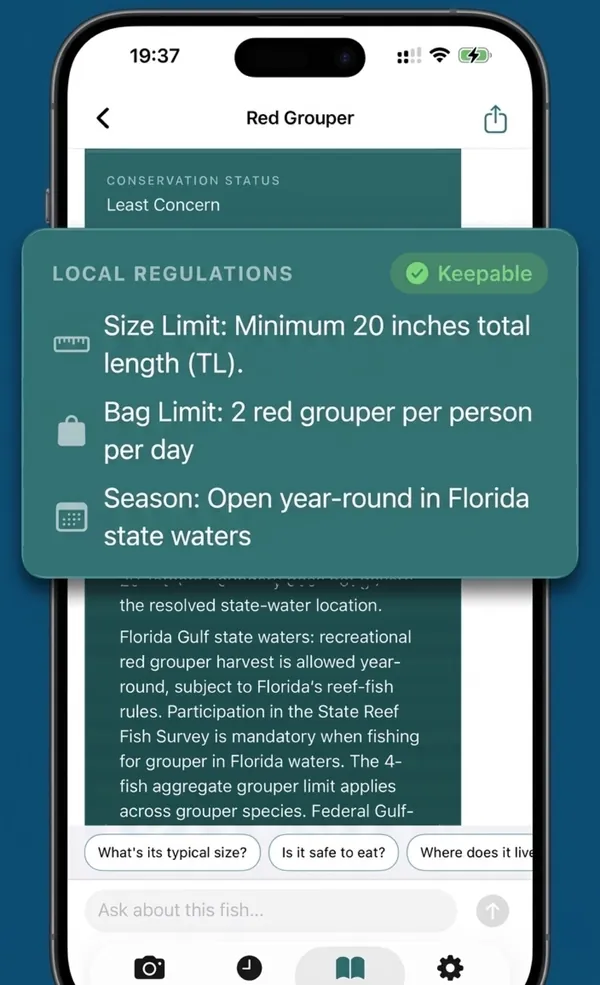
Fish Identifier: CatchScan is built for that moment. When you photograph your catch, the app:
- Identifies the species, so the rules you see are for the fish you actually caught (see what fish did I just catch?).
- Reads the location saved in your photo rather than where your phone is now, and works out which jurisdiction governs that water. That includes whether you were in state or federal waters, checked against NOAA boundary data.
- Shows the rules: size limit, bag limit and season status, with a keep-or-release badge when the rules settle it and "Check before keeping" when they can't.
- Answers follow-up questions in the same chat, such as "How do I measure it?" or "Is it good eating?" Premium. Rules mentioned in a follow-up aren't source-checked, so rely on the first result and the official source.
When to check the official source
Your state fisheries agency sets and enforces the regulations in state waters, federal managers do so in federal waters, and the rules can change mid-season. CatchScan gives you an answer at the water's edge, but for borderline calls, such as a fish right at the limit or an unusual zone boundary, confirm with the official source. When in doubt, release the fish.