 CatchScan
Start with the species
Whether a fish is good to eat depends first on the species. Most game fish are excellent eating and some are poor table fare, but a few are genuinely risky: pufferfish carry tetrodotoxin, and large barracuda and some big reef predators can carry ciguatera. Certain species are protected and can't be kept at all. You can't judge any of this until you know the fish, so if you're not sure what you caught, start with our guide to identifying your catch.
The four safety checks
1. Is the species edible at all?
Some fish are prized (salmon, walleye, snapper), some are edible but bony or muddy-tasting, and a handful are unsafe however you prepare them.
2. Are there local consumption advisories?
State health departments publish advisories for specific waters, usually about mercury or PCBs. They recommend limits on how often you eat certain species from certain lakes and rivers. The same species can be safe to eat from one lake and carry an advisory in the next one over. Larger, older and predatory fish accumulate more of these contaminants.
3. Any species-specific risks?
In tropical and subtropical salt water, the main one is ciguatera, a toxin from reef algae that builds up through the food chain into large predators such as big barracuda and some groupers and jacks. It has nothing to do with freshness and isn't destroyed by cooking, so your protection is knowing which species and sizes to avoid in your region.
4. Is this individual fish fresh and healthy?
A fresh fish has clear eyes, red gills, firm flesh and a clean smell. Skip fish with sores or parasitized flesh, ice your catch quickly and cook it properly.
Asking CatchScan "Is it safe to eat?"
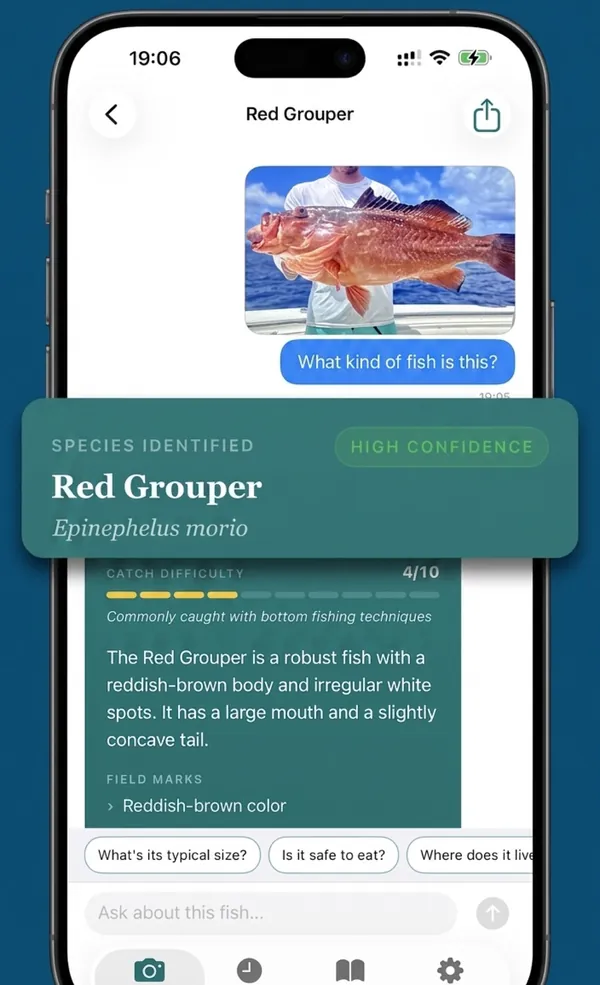
Fish Identifier: CatchScan puts this checklist into one flow:
- Photograph the fish. The AI identifies the species, which every safety question depends on.
- Tap "Is it safe to eat?" It's one of the suggested questions after every identification, and a Premium feature.
- Read the answer for that species: whether it's edible, what it's like on the table, and the risks worth knowing about.
- Ask more questions, such as "How should I cook it?", "Are there advisories for this kind of water?" or "How big is too big to eat regularly?"
Whether a fish is safe to eat and whether you can legally keep it are separate questions, so CatchScan also shows the size limits, bag limits and season for the place the photo was taken. Our size and bag limits guide explains them.
Where to double-check
Your state health department and fisheries agency publish the current consumption advisories for the specific water you fish. CatchScan gives you a species-level answer at the water in seconds, but check the advisory for that water before you eat fish from it. Some advisories say not to eat certain species at all, and many set stricter limits for pregnant women and children.