 CatchScan
The short answer
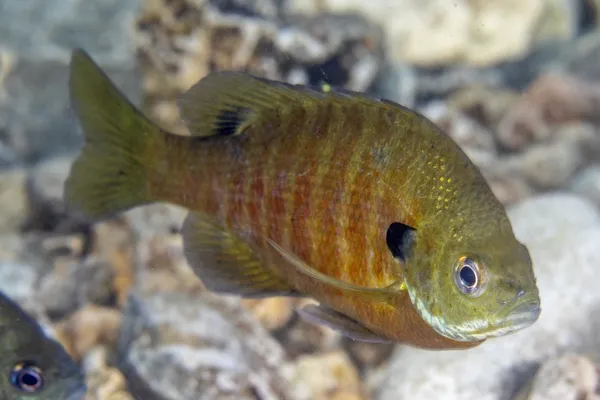
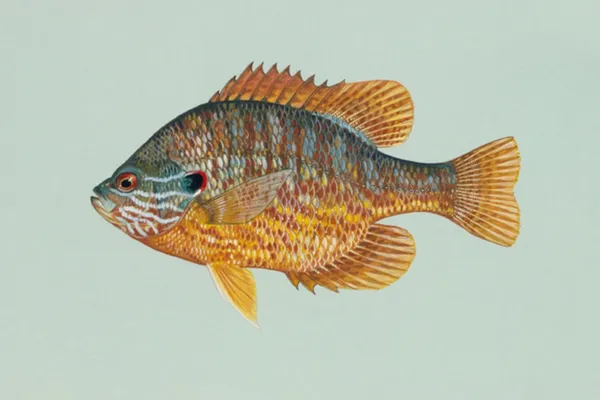
Look at the ear flap, at the back edge of the gill cover. A bluegill's is black. A pumpkinseed's has a bright orange-red spot, and a redear sunfish's has a prominent orange or red spot inside a whitish border. Then check the mouth and the pectoral fin, the fin on the side behind the gill cover. A bluegill has a small mouth and a long, pointed pectoral fin, and a green sunfish has a large mouth and a rounded fin.
What "sunfish" means
The Missouri Department of Conservation's field guide puts bluegill, green sunfish, redear sunfish, longear sunfish and warmouth in the sunfish family. It puts black crappie, white crappie and largemouth bass there too.
The word is also used more narrowly. Missouri's Fishing Species A-Z list has a "Sunfish" entry for bluegill, green, longear and redear sunfish, with separate entries for crappie and black bass. The Washington Department of Fish and Wildlife says pumpkinseeds are often called just "sunfish". So a fish that someone calls a sunfish may be a bluegill or one of its relatives.
The marks, one at a time
Ear flap
- Bluegill: black and moderately long.
- Pumpkinseed: the spot on the margin of the gill cover is bright orange-red.
- Redear sunfish: black with a whitish border and a prominent orange or red spot.
- Green sunfish: long and dark.
- Longear sunfish: elongated, black and often bordered in white.
The pumpkinseed line comes from the Washington Department of Fish and Wildlife, which describes the bluegill's spot as blue-black. The other four come from Missouri's field guide.
Mouth
- Bluegill: small, with the upper jaw not reaching past the front of the eye.
- Redear sunfish: small, with the upper jaw not reaching past the front of the eye.
- Longear sunfish: moderate-sized, with the upper jaw nearly reaching the front of the eye.
- Green sunfish: large, with the upper jaw reaching to about the middle of the eye.
All four are Missouri's descriptions. Washington's page says bluegill and pumpkinseed both have smaller mouths than bass or crappie.
Pectoral fin
- Bluegill: long and pointed. Bent forward across the eye, it reaches well past the front of the eye.
- Green sunfish: rounded.
- Longear sunfish: rounded.
Missouri's field guide gives all three. Its redear page does not describe the fin.
Head and cheek
- Bluegill: the chin and the lower part of the gill cover are blue.
- Pumpkinseed: turquoise and orange cheek stripes on larger fish.
- Green sunfish: blue mottlings and streaks on the side of the head.
- Longear sunfish: an olive or light orange head with wavy sky-blue markings.
The pumpkinseed line is Washington's and the rest are Missouri's.
Dorsal fin and sides
A bluegill often has a black blotch near the back of its dorsal fin, and the Florida Fish and Wildlife Conservation Commission names that blotch, along with the dark ear covering, as what sets a bluegill apart. Missouri's field guide says the green sunfish usually has a dark splotch on the back of its dorsal fin as well. Washington gives the bluegill 5 to 9 vertical bars that are not always distinct, and Missouri says a green sunfish sometimes shows black vertical bars and a redear often has dark ones. So a blotch or bars alone do not tell a bluegill from a green sunfish.
Bluegill vs pumpkinseed
The Washington Department of Fish and Wildlife says bluegill are often mistaken for pumpkinseed sunfish. It tells them apart by the spot on the gill cover, which is blue-black on a bluegill and bright orange-red on a pumpkinseed. It also describes the pumpkinseed as usually lighter and more brilliantly colored, with turquoise and orange cheek stripes on larger fish.
Range can hint at the answer. The U.S. Geological Survey gives the pumpkinseed a native range on the Atlantic slope from New Brunswick to South Carolina and in the Great Lakes, Hudson Bay and upper Mississippi basins. The bluegill's covers the St. Lawrence River, Great Lakes and Mississippi River basins south to the Gulf, and Atlantic and Gulf slope drainages from the Cape Fear River to the Rio Grande. Both have been introduced outside those ranges, and Montana's field guide says neither is native to that state, which now has both.
Bluegill vs green sunfish
Missouri's field guide describes the green sunfish as thick-bodied with a large mouth, and its upper jaw reaches to about the middle of the eye. A bluegill's does not reach past the front of the eye. The pectoral fin is rounded on the green sunfish and long and pointed on the bluegill. The green sunfish also has blue mottlings and streaks on the side of its head, and on breeding males the tail, anal and dorsal fins are tipped with white or salmon pink.
Bluegill vs redear sunfish
Both have a small mouth, so look at the ear flap. Missouri's field guide gives the redear a black flap with a whitish border and a prominent orange or red spot, and the Florida Fish and Wildlife Conservation Commission calls the bright red mark on the back edge of the gill cover very distinctive. The redear is also called the shellcracker, a name Missouri's field guide ties to its diet of snails and other mollusks. A redear can also grow larger. Missouri lists bluegill to about 9½ inches, and says a redear can be more than 12 inches long and weigh more than 4 pounds.
A pumpkinseed and a redear both have red or orange on the ear flap. The U.S. Geological Survey reports the redear's native range as Atlantic and Gulf slope drainages from about the Savannah River in South Carolina to the Nueces River in Texas, and north in the Mississippi River basin to southern Indiana and Illinois. Washington's page gives the pumpkinseed turquoise and orange cheek stripes, and Missouri's description of the redear mentions none.
Longear sunfish and warmouth
Missouri's field guide describes the longear sunfish as a small fish, 5 to 6 inches long, with an elongated black ear flap that is often bordered in white, wavy sky-blue markings on the side of the head and a rounded pectoral fin. The warmouth is a thick-bodied sunfish with a large mouth. It has 4 or 5 reddish-brown streaks radiating from the eye across the side of the head, and the iris of the eye is red.
Crappie vs bluegill
Crappies are in the same family, and Missouri's field guide describes them as deep-bodied and slab-sided, as it does the redear and the longear. The mouth separates a crappie from a bluegill. A crappie's upper jaw is long and reaches well past the middle of the eye, and a bluegill's does not reach past the front of it. The fins differ too: a bluegill's dorsal fin has 10 spines, a black crappie's has 7 or 8 and a white crappie's usually has 6, and a crappie's anal fin is nearly as long and as large as its dorsal fin. A black crappie is silvery with irregularly arranged speckles and blotches, and a white crappie has faint vertical bars. Our guide to look-alike species covers the two crappies.
Size
These fish overlap in size. Missouri's field guide lists bluegill to about 9½ inches, green sunfish at 6 to 8 inches with a maximum of about 10, redear at 8 to 10½ inches and longear at 5 to 6 inches. Washington gives pumpkinseed an average of 3 to 6 inches and bluegill an average of 4 to 8.
Hybrid sunfish
Sunfish cross with each other. The U.S. Geological Survey says bluegill hybridize with green sunfish, redear sunfish, redbreast sunfish and warmouth, and that pumpkinseeds will hybridize with most other fish in their genus, especially bluegill and green sunfish. The U.S. Fish and Wildlife Service says several hybrid sunfish crosses are used to stock ponds, and that the hybrid bluegill, a cross between a male bluegill and a female green sunfish, is sometimes called a hybrid sunfish.
Why the name matters for the rules
Fishing rules can name one species or a group of them, and Florida is one example. As of 23 November 2026, the Florida Fish and Wildlife Conservation Commission's statewide bag limits list bluegill, redear sunfish, longear sunfish, warmouth and several other fish together as "panfish", counted individually or in total, and list crappie separately.
That is one state's list. Rules change and differ from water to water, so check the current rules from the fish and wildlife agency for the place you are fishing. Our guide to size and bag limits explains how these rules work.
Checking a photo with CatchScan
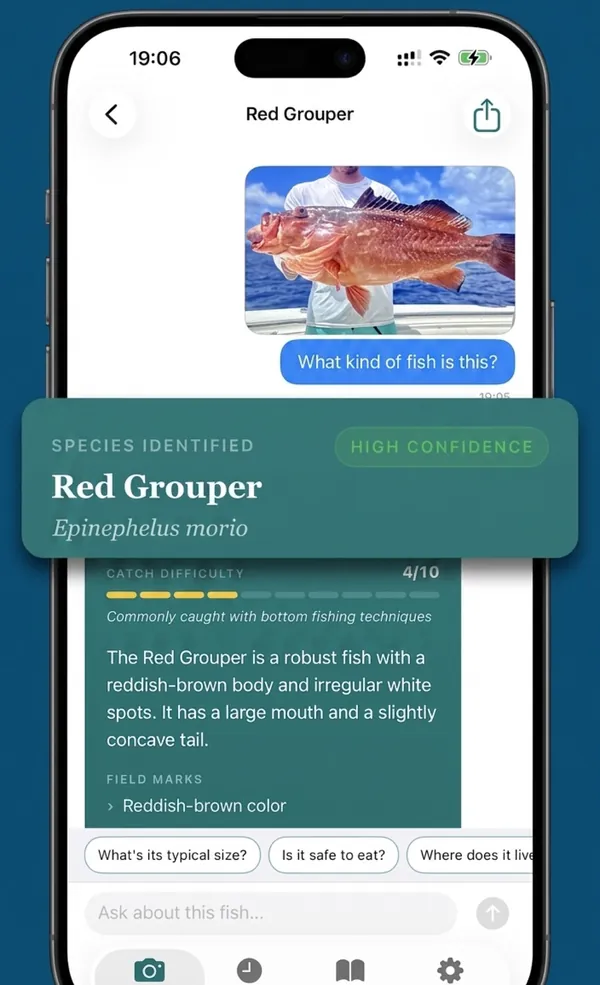
Fish Identifier: CatchScan names a fish from a photo. The result shows the species with a confidence level of high, medium or low. Under "Field marks" it lists the features of the fish it named, and under "Don't confuse with" it names look-alike species with a line on how to tell each one apart.
When the scan has a location, the result can add a "Local regulations" panel, with the date the rules shown were in force. The app is a reference tool and not legal advice. Always confirm with the official authority before you keep a fish.
Whether you check by eye or with the app, a side-on photo shows the ear flap, the mouth and the pectoral fin in one frame. Our photo guide covers framing. The guides to freshwater fish identification and largemouth vs smallmouth bass cover more of the family.
Sources
- Missouri Department of Conservation, field guide: Bluegill, Green Sunfish, Redear Sunfish, Longear Sunfish, Warmouth, Black Crappie, White Crappie and Largemouth Bass, and its Fishing Species A-Z list, read 23 November 2026
- Washington Department of Fish and Wildlife: Bluegill and Pumpkinseed Sunfish, read 23 November 2026
- U.S. Geological Survey, Nonindigenous Aquatic Species: Bluegill, Pumpkinseed and Redear Sunfish species profiles, read 23 November 2026
- Florida Fish and Wildlife Conservation Commission: Bluegill and Redear Sunfish profiles and General Statewide Bag and Length Limits, read 23 November 2026
- Montana Field Guide: Bluegill and Pumpkinseed, read 23 November 2026
- Pictures from the U.S. Fish and Wildlife Service media library, public domain: Bluegill (photo, Ryan Hagerty/USFWS), Pumpkinseed (illustration, Duane Raver) and the caption of Hybrid sunfish, read 23 November 2026